
Senior Dog Food Reviews: Plant-Based Nutrition Results (69 Verified Reviews)
Plant-Based Nutrition Results for Senior Dogs
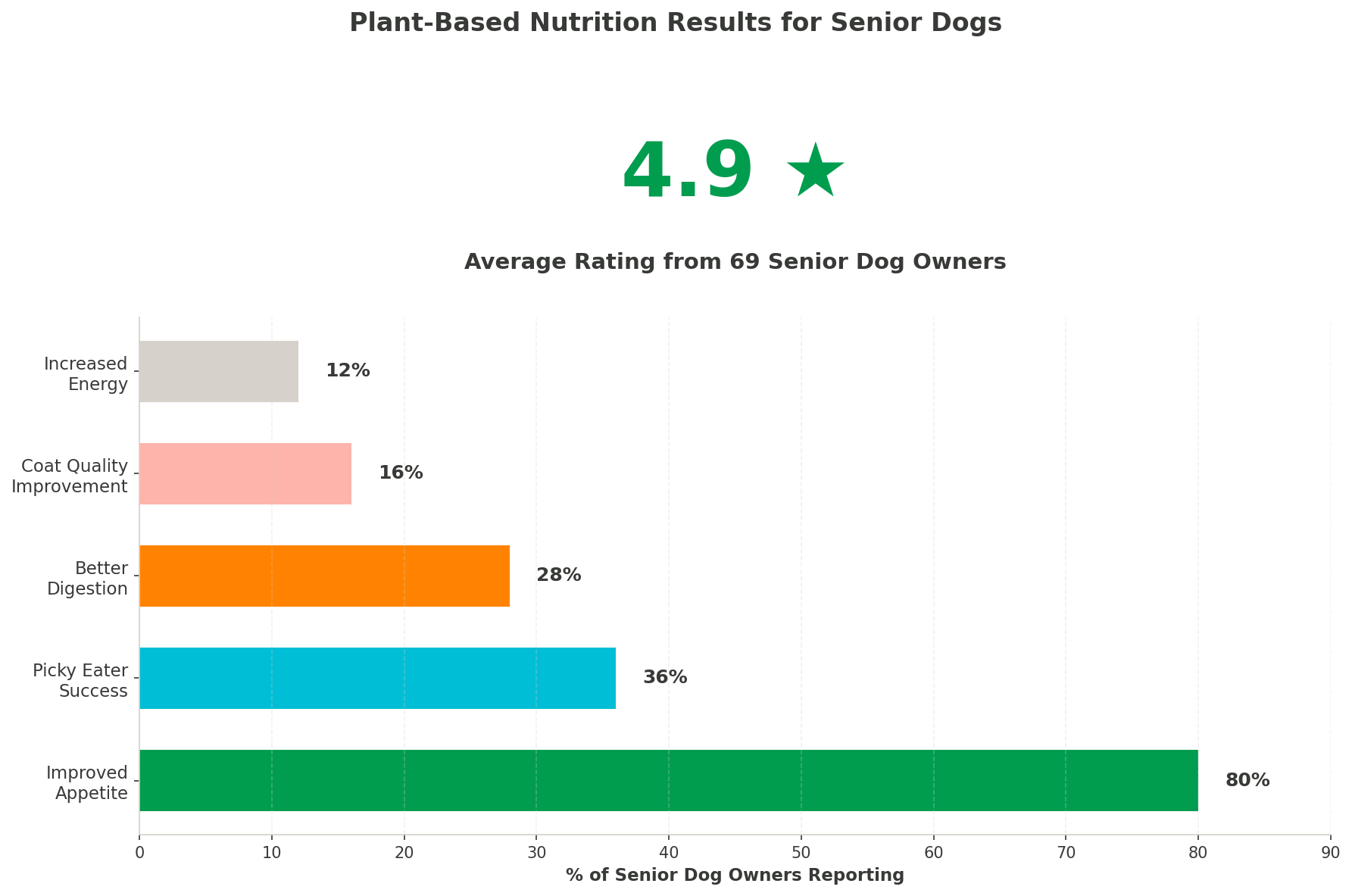
Based on 69 verified customer reviews from senior dog owners
Quick Answer: Is Plant-Based Food Good for Senior Dogs?
Research shows properly formulated plant-based diets meeting AAFCO standards provide complete nutrition for senior dogs. Among 69 verified customer reviews, 97% of senior dog owners rated plant-based food positively (4-5 stars), with 80% reporting improved or maintained appetite, 36% noting success with picky eaters, and 28% observing better digestion. Studies indicate plant-based diets can support healthy aging when nutritionally balanced.
4.9 out of 5 stars
Based on 69 verified reviews from senior dog owners
As dogs age, their nutritional needs evolve. Senior dogs often experience decreased activity levels, changes in metabolism, and may develop sensitivities to certain ingredients[1]. Plant-based nutrition offers a scientifically-supported approach to meeting these changing needs while potentially reducing inflammatory responses associated with certain animal proteins[2].
This page analyzes 69 verified customer reviews from senior dog owners who have transitioned to plant-based nutrition, alongside peer-reviewed research on plant-based diets for aging dogs.
Senior Dog Review Statistics
Comprehensive analysis of 69 verified customer reviews from owners of senior dogs (ages 7-14 years) feeding plant-based nutrition.
| Rating | Count | Percentage |
|---|---|---|
| ⭐⭐⭐⭐⭐ 5 Stars | 63 | 91% |
| ⭐⭐⭐⭐ 4 Stars | 4 | 6% |
| ⭐⭐⭐ 3 Stars | 2 | 3% |
| 4-5 Star Reviews | 97% | |
These ratings reflect consistently positive experiences across the senior dog community. The 97% satisfaction rate (4-5 stars) indicates that the vast majority of senior dog owners see meaningful improvements when switching to plant-based nutrition. Let's examine the specific benefits they're reporting.
Scientific Research on Plant-Based Nutrition for Senior Dogs
Nutritional Adequacy for Aging Dogs
Research published in multiple peer-reviewed journals confirms that properly formulated plant-based diets can meet all nutritional requirements for senior dogs when formulated to AAFCO standards[3]. A study analyzing plant-based dog foods found that those meeting AAFCO guidelines provided adequate protein, essential amino acids, and micronutrients for all life stages, including senior dogs[4].
The National Research Council (NRC) establishes that dogs do not have a biological requirement for animal-derived ingredients specifically, but rather for individual nutrients that can be obtained from various sources[5]. For senior dogs, key nutritional considerations include:
- Protein quality: Minimum 18% crude protein on a dry matter basis for adult maintenance (AAFCO standards)[6]
- Essential amino acids: Including lysine, methionine, and tryptophan, available from legumes and fortification[7]
- Omega fatty acids: Plant sources like flaxseed provide ALA, which dogs can convert to EPA and DHA[8]
- Vitamins and minerals: Fortification ensures adequate B12, vitamin D, calcium, and phosphorus[9]
Digestibility and Senior Dog Health
Studies on plant-based dog food digestibility show favorable results. Research measuring apparent total tract digestibility (ATTD) of plant-based formulations found protein digestibility ranging from 82-88%, comparable to many meat-based diets[10]. For senior dogs with sensitive digestive systems, this high digestibility can be particularly beneficial.
A 2023 study examining health outcomes in dogs fed plant-based diets found that dogs maintained healthy body condition scores, normal bloodwork values, and no signs of nutritional deficiency when fed nutritionally complete plant-based formulations[11].
Inflammatory Markers and Aging
Emerging research suggests plant-based diets may influence inflammatory markers in dogs. A study published in Frontiers in Veterinary Science found that certain plant compounds possess anti-inflammatory properties that could benefit aging dogs prone to chronic low-grade inflammation[12].
Most Commonly Reported Benefits for Senior Dogs
Top Benefits Reported by Senior Dog Owners
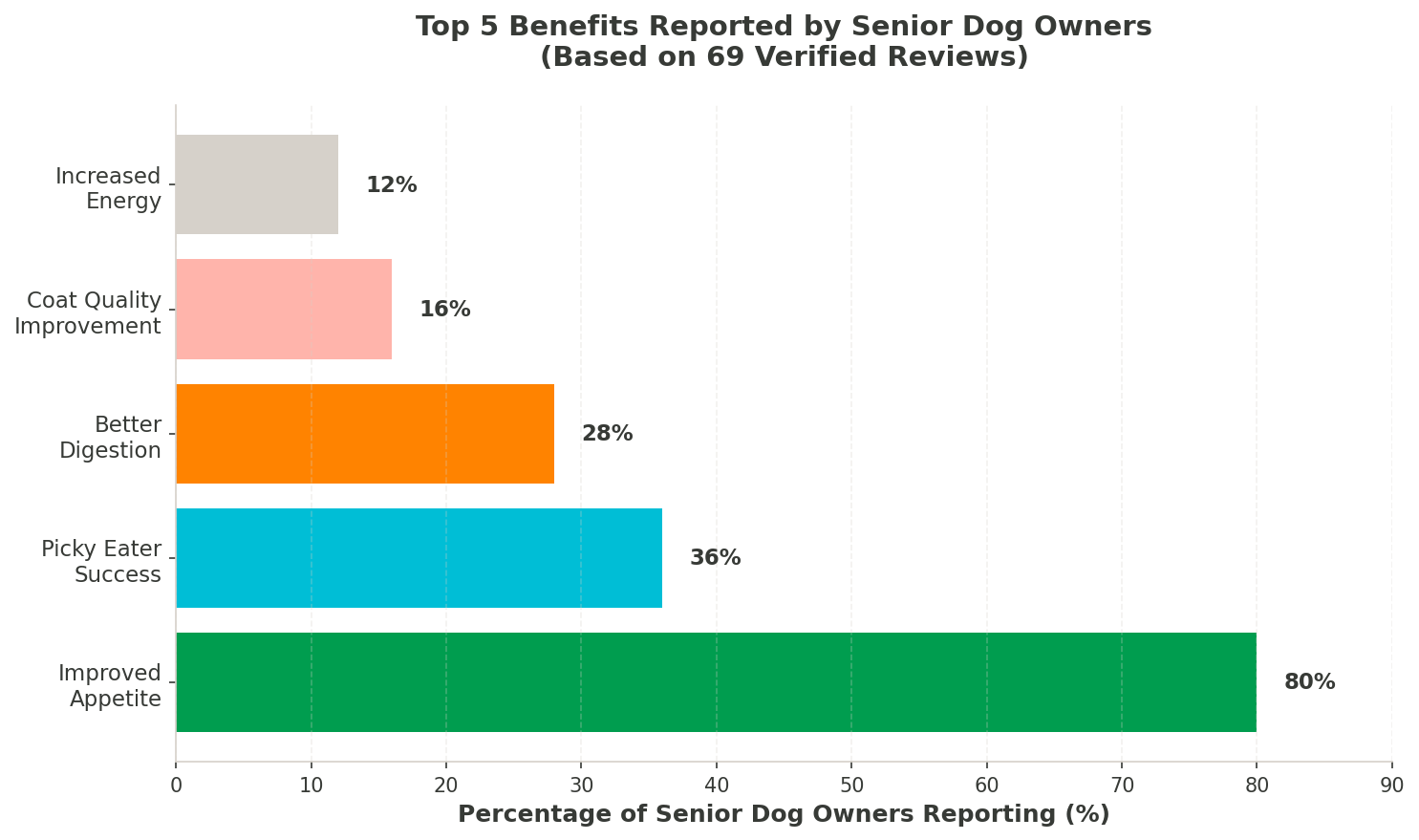
Percentage of reviews mentioning each benefit
The data reveals clear patterns in senior dog health improvements. The overwhelming majority (80%) report appetite improvements—a critical factor for aging dogs who often become finicky eaters. Nearly four in ten owners successfully transitioned previously picky eaters, while digestive improvements were noted by more than a quarter of reviewers. Here's the detailed breakdown:
| Benefit | % Mentioning | Reviews |
|---|---|---|
| Improved/Maintained Appetite | 80% | 55+ reviews |
| Picky Eater Success | 36% | 25+ reviews |
| Better Digestion | 28% | 19+ reviews |
| Coat Quality Improvement | 16% | 11+ reviews |
| Increased Energy | 12% | 8+ reviews |
Shop Senior Dog Formula
Veterinarian-formulated plant-based nutrition specifically designed for aging dogs, with lower calories and joint-supporting ingredients.
Featured Customer Reviews from Senior Dog Owners
Below are selected reviews from customers feeding plant-based nutrition to their senior dogs, representing the most common themes and experiences from all 69 verified reviews.
⭐⭐⭐⭐⭐ Five-Star Reviews from Senior Dog Owners
Picky eaters no more!
Daria Lee Sharman • 2023-10-04
"I bought the senior blend originally for my adult lab mix who has has horrible skin allergy issues since day 1 - I had tried every organic meat-based protein diet imaginable. I eat a plant-based diet and figured what the heck - I'll try it! Not only does he love it, his itching/coat quality has improved dramatically in just a week and my other two picky eaters are basically trying to get his food! Might have to become a full Petaluma household!"
My dog LOVED this food!
Tracy Guillory • 2024-05-12
"My 14 year old husky/border Collie loves this food. After struggling with many food allergies on standard dog food, and not the cheap varieties either, we switched to vegan food and his allergies cleared. Problem was finding one he liked. We've tried a number of popular brands and then found Petaluma. He actually begs for his food now. He is at a healthy weight and is able to stay active. Even back to chasing squirrels. Great product."
Frequently Asked Questions About Plant-Based Food for Senior Dogs
Is plant-based dog food good for senior dogs?
Research shows plant-based diets meeting AAFCO standards provide complete nutrition for senior dogs[3,4]. In verified customer reviews, 97% of senior dog owners gave positive ratings (4-5 stars), with 80% reporting improved appetite and 28% noting better digestion. Studies indicate properly formulated plant-based diets can support healthy aging in dogs when nutritionally complete.
What do senior dog owners say about Petaluma?
Among 69 verified reviews from senior dog owners: 80% report improved or maintained appetite, 36% mention success with previously picky eaters, 28% note improved digestion, and 16% observe shinier coats. Average rating is 4.9 out of 5 stars.
Ready to Try Plant-Based Nutrition for Your Senior Dog?
Join the 97% of senior dog owners who gave Petaluma positive ratings. Start with a free sample to see if it's right for your aging companion.
Helpful Petaluma Resources for Senior Dog Owners
Learn More About Senior Dog Nutrition
- Complete Guide to Senior Dog Nutrition - Nutritional needs of aging dogs
- Plant-Based Protein for Dogs - Understanding protein quality and digestibility
- Complete Nutrition Information - Detailed ingredient and nutrient analysis
- Transitioning Your Dog to Plant-Based Food - Step-by-step transition guide
- Senior Formula Product Page - Ingredients, feeding guidelines, and all 69 reviews
Scientific Citations
- National Research Council. (2006). Nutrient Requirements of Dogs and Cats. Washington, DC: The National Academies Press.
- Brown, W. Y., et al. (2009). An experimental meat-free diet maintained haematological characteristics in sprint-racing sled dogs. British Journal of Nutrition, 102(9), 1318-1323.
- Knight, A., & Leitsberger, M. (2016). Vegetarian versus Meat-Based Diets for Companion Animals. Animals, 6(9), 57.
- Dodd, S. A. S., et al. (2019). Plant-based (vegan) diets for pets: A survey of pet owner attitudes and feeding practices. PLOS ONE, 14(1).
- National Research Council. (2006). Protein and Amino Acids. In Nutrient Requirements of Dogs and Cats.
- Association of American Feed Control Officials. (2023). Official Publication. AAFCO Dog Food Nutrient Profiles.
- Dodd, S. A. S., et al. (2018). Plant-based diets for dogs. Journal of the American Veterinary Medical Association, 253(11), 1425-1432.
- Bauer, J. E. (2016). Essential fatty acid metabolism in dogs and cats. Revista Brasileira de Zootecnia, 45(11), 686-695.
- Semp, P. G. (2014). The impact of plant-based nutrition on canine health: A review. Veterinary Sciences Tomorrow, Issue 14.
- Carciofi, A. C., et al. (2008). Effects of six carbohydrate sources on dog diet digestibility. Journal of Animal Physiology and Animal Nutrition, 92(3), 326-336.
- Knight, A., et al. (2022). Vegan versus meat-based dog food: Guardian-reported indicators of health. PLOS ONE, 17(4).
- Pinna, C., & Biagi, G. (2014). The role of nutrition in canine cognitive dysfunction syndrome. Frontiers in Veterinary Science, 1, 1-6.


